
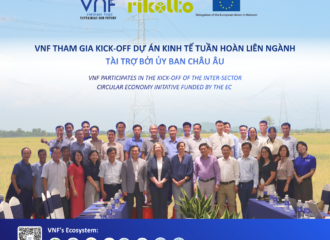
Vietnam Food Joint Stock Company (VNF) joins EU-funded initiative to advance the circular economy in the shrimp, rice and coffee industries
Shrimp, rice and coffee are among Vietnam's most important agricultural exports, yet each faces rising
pressure over emissions, resource use and tougher sustainability requirements from export markets.
Vietnam Food Joint Stock Company (VNF) has signed a Memorandum of Understanding to help build a
circular economy in the shrimp industry and across the rice and coffee value chains, contributing its research
and processing strength in shrimp by-product valorization. The move aims to turn by-products into highervalue inputs, reduce emissions and expand circular economy models in the Mekong Delta and the Central
Highlands.
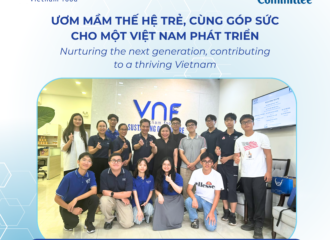
Vietnam Food Joint Stock Company (VNF) shares its circular economy from shrimp by-products with the next generation of talent
A nation’s growth strategy works best when it builds on core strengths and nurtures the people who will carry it forward. Acting on this belief, Vietnam Food Joint Stock Company (VNF) welcomed a group of interns from Board IV (the Private Economic Development Research Board) and shared how its research turns shrimp by-products into valuable inputs — a practical model of the circular economy from shrimp by-products. The visit showed young talent that innovation need not start from something grand; it can begin by re-examining the resources already at hand.
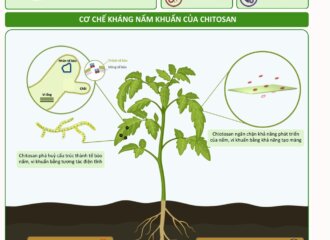
Vietnam Food Joint Stock Company (VNF) develops a biological crop protection solution from shrimp-shell Chitosan
Chitin in shrimp and crab shells — a by-product long treated as waste — is in fact the second most abundant biopolymer in nature. From this raw material, Vietnam Food Joint Stock Company (VNF) applies extraction technology to create ChitoBlossom (Chitosan), a biological crop protection solution that controls fungi and bacteria while remaining safe for soil and people. It offers farmers a way to reduce reliance on conventional agrochemicals without sacrificing yield.