The seafood industry is entering an important transition phase. By-products are no longer viewed merely as a disposal issue, but are increasingly recognized as potential resources when approached with appropriate biotechnology. This shift creates opportunities to improve economic efficiency while moving toward sustainable and circular development models.
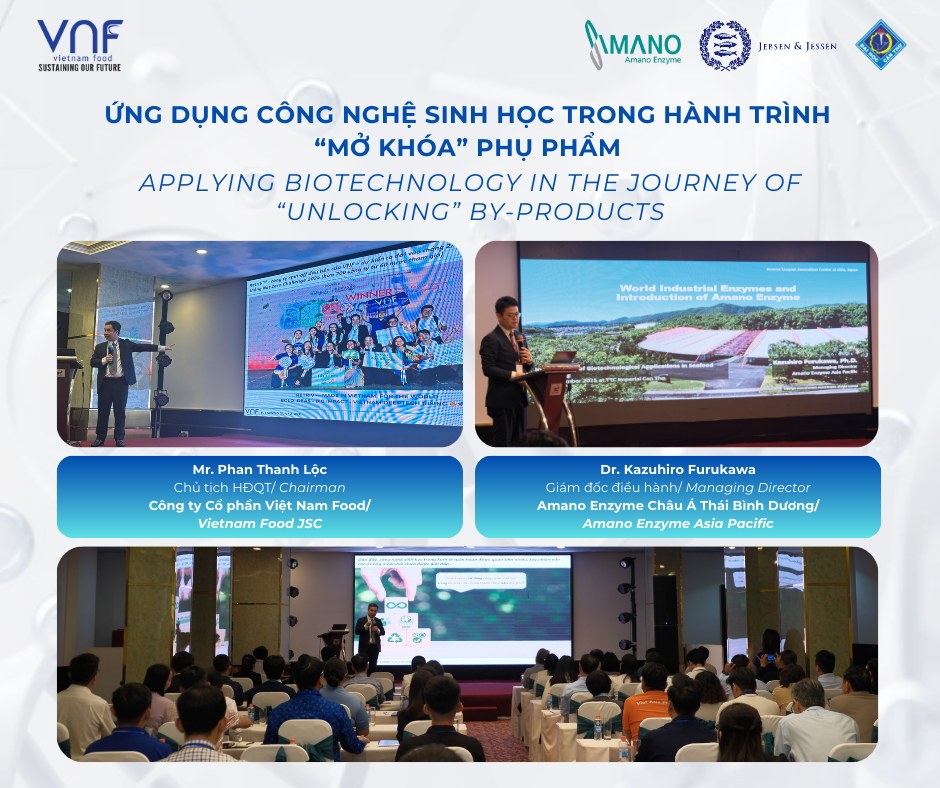
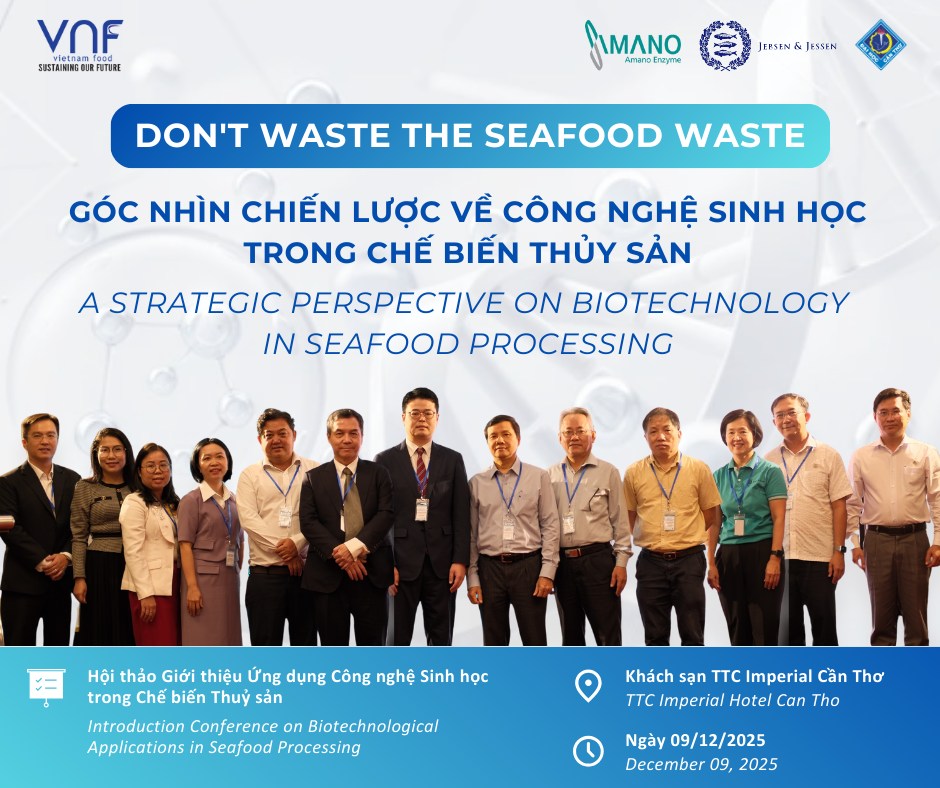
 On December 9, 2025, at the Biotechnology Application Introduction Workshop organized by Amano Enzyme Vietnam, Jebsen & Jessen Ingredients, and Can Tho University (Đại học Cần Thơ – CTU), Mr. Phan Thanh Loc, Chairman of VNF, participated as a guest speaker and shared the topic “Biotechnology Applications in Seafood Processing – From By-products to High-Value Products.”
 Biotechnology as a foundation for transformation
For many years, seafood by-products have mainly been handled through simple mechanical and chemical methods. This approach generates limited added value and is increasingly inadequate in meeting economic, environmental, and market requirements.
From its establishment, VNF has chosen biotechnology as a strategic foundation, enabling the extraction of high-value bio-based ingredients while reducing pressure on by-product treatment and environmental impact. In practice, VNF has expanded processing beyond shrimp by-products from processing plants to include molting shells from ponds, creating a basis for export-oriented products with competitive potential.
 Biotechnology unlocks by-products
Based on practical experience, VNF believes biotechnology is most effective when applied systematically, including:
• Bioconversion to extract peptides, chitosan, astaxanthin, lipids, and minerals suited to each type of raw material;
• Biological solutions that reduce chemical use, energy consumption, and emissions while improving product quality;
• Process design that balances efficiency, controllability, and sustainability during scale-up.
 From biotechnology to a circular economy
Biotechnology application should not stop at optimizing individual processing steps, but should move toward a circular economy model based on bio-resources. This approach helps enterprises improve production efficiency while meeting increasing requirements for sustainability, traceability, and ESG standards.
 By-products are not waste, but resources.
Biotechnology is not the only solution, but it is becoming an important foundation for the long-term competitiveness of the seafood industry. In this journey, VNF considers collaboration a key factor and is ready to work with partners to create sustainable value.
 VNF sincerely thanks Amano Enzyme, Jebsen & Jessen, and CTU for creating opportunities to share expertise and connect perspectives at the workshop.